|
|
|
|
|
|
|
|
|
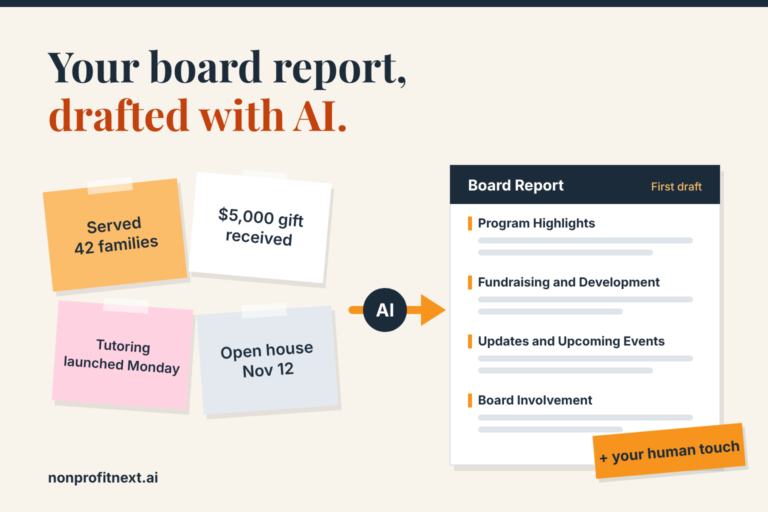
This issue is about getting started with AI. You do not need a highly structured plan or new software to get value from AI. You can start with one task you already do, a few notes, and clear instructions. Our newest blog post walks through that exact process with your board report, and it includes a free prompt you can copy.
|
|
|
Starting small does not mean skipping the basics. Before any information goes into an AI tool, you should know where it goes and who can see it. Several of the stories below come back to that point, from a survey showing how few nonprofits have a plan for AI to a simple rule for using AI with your data.
|
|
|
The world of AI moves fast, with something new and exciting happening almost every day. However, for most people, the basics remain the focus: identifying where and how AI can help you, writing good prompts, and protecting confidential information. If something here is useful, or you have a question, reply to this email. It comes straight to me.
|
|
|
|
|
|
|
|
|
Co-Founder, NonprofitNext
|
|
|
|
|
|
- A free prompt for writing your board report with AI, and three questions to ask before AI ever touches client data
- Our AI Readiness Assessment
|
- Seven AI news stories, including a survey showing only 8 percent of nonprofits have an AI plan, and a housing nonprofit's AI helper
- One thing to try this week, and a question to start our reader Q&A
|
|
|
|
|
|
|
|
|
|
How to Write Your Executive Director Board Report With AI (Free Prompt)
|
The report you send your board is one of the best places to start with AI. It is a task you already do, it comes around on a regular schedule, and it often takes longer than it should. This step-by-step guide includes a free prompt you can copy that turns your rough notes into an organized first draft, with instructions that tell the AI to use only the facts you give it. You still review the draft, add your own perspective, and decide what your board receives.
|
|
|
|
|
3 Questions Nonprofits Should Ask Before Connecting AI to Client Data
|
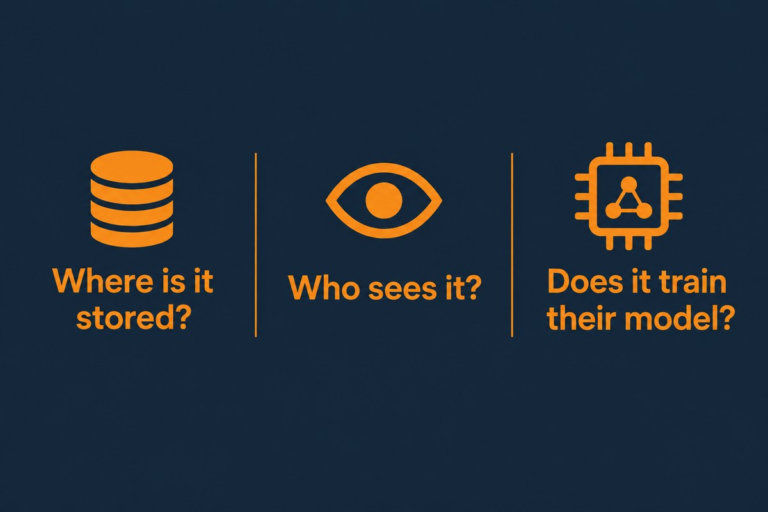
Before client, donor, or case information goes into an AI tool, get clear answers to three questions: where the data is stored and for how long, who can access it, and whether the provider uses it to train its models. The post also shares a simple habit that removes much of the risk: draft with placeholders, then add the private details yourself inside your own systems.
|
|
|
|
|
|
|
|
|
|
|
Service SpotlightNonprofit AI Readiness Assessment
|
|
|
|
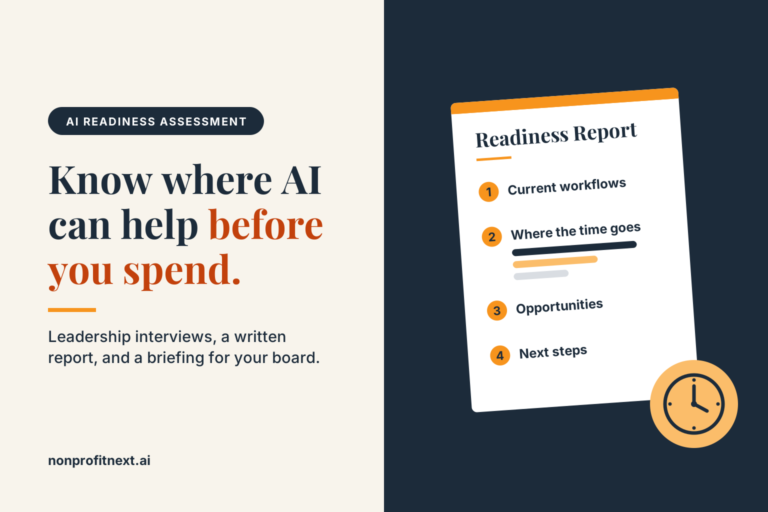
Before your organization spends money on AI tools, our AI Readiness Assessment shows where AI and automation can give your staff time back. We interview your leadership team, and for larger organizations your program staff, map the workflows and software you use today, and deliver a written report in plain language with specific opportunities and estimated time savings. The engagement ends with a presentation to your staff and board. The price is flat and confirmed before any work starts, there is no obligation to further work, and you do not need technical staff to take part.
|
|
|
|
|
|
|
|
|
|
AI News That Matters to Nonprofits
|
The latest AI news stories affecting nonprofits, chosen for leaders who do not have time to follow tech!
|
|
|
|
|
AI Will Repeat the Mistakes in Your Data
|
This NonProfit Times piece pulls together several 2026 surveys. A Virtuous benchmark found that 92 percent of nonprofits use AI in some form, but only 7 percent see impact at the level of strategy, and nearly 40 percent of nonprofits report no staff trained in AI and no AI governance policy.
|
|
|
The advice is practical: set consistent data entry rules, merge duplicate records on a regular schedule, and extend the data governance you already have to cover AI instead of writing a separate policy. For small teams, the author suggests starting with the group of donors that brings in the most revenue. Note: the author works for a nonprofit data company, but the piece is not a sales pitch.
|
|
|
Larry's take: In my over 25 years in the nonprofit sector, I frequently found myself working on data collection, reporting, and program evaluation. If there is one thing I learned from working with data, it is "garbage in, garbage out." If your client or donor records have duplicates and inconsistent entries today, AI will repeat those mistakes in its output. Cleaning up the records you rely on most is slow, unexciting work. However, it pays off in the end whether or not you ever use an AI tool.
|
|
|
|
|
|
|
|
The Gates Foundation Publishes the Principles Behind Its AI Work
|
Gates Foundation CEO Mark Suzman published eight principles that will guide the foundation's AI work, an update of its 2023 version. They cover equitable access, language and local context, privacy and data governance, limiting harm, and accountability for real benefit. They also state plainly that AI is not always the right tool for the job.
|
|
|
The foundation also committed $1 billion over two years to help health workers, teachers, and farmers adapt AI tools to their own needs.
|
|
|
Larry's take: The eight principles are thought-provoking and offer a solid basis for thinking about your organization's relationship with AI. Best of all, you do not need a billion dollars to borrow this approach. Read the eight principles, pick the ones that fit your organization, and use them as the opening section of your own AI policy. Funders are starting to ask grantees how they use AI, and a written set of principles can give you a clear answer.
|
|
|
|
|
|
|
|
AI Is Letting Small Nonprofits Build Their Own Tools
|
In the Stanford Social Innovation Review, Allison Fine argues that AI coding tools now let small nonprofits build and adjust their own tools instead of paying outside developers for every change. Her examples include a nonprofit leader who built a map for her website with an AI assistant after paying $7,000 for the original site, and a custom tool that cut a drum and bugle corps' outsourced accounting costs by up to 25 percent a month.
|
|
|
She lays out three steps: set ethical, people-centered standards first, identify your most critical systems, then decide whether to build in house or hire help.
|
|
|
Larry's take: Advances in AI give organizations a real opportunity to "vibe code" their own software, which means describing what you want in plain language and letting an AI tool write the code. The security risks are also very real. I support freedom from expensive contracts and from being locked into a single vendor. However, nonprofits should take care when they build their own software, especially applications that will hold confidential information.
|
|
|
|
|
|
|
|
Protect, Prompt, Prove: A Simple Rule for Using AI With Your Data
|
At the San Francisco Tech Council's AccessTech Summit, Cristy Rowley of OpenOakland showed about 100 nonprofit leaders how to use AI to make sense of messy spreadsheets. Her advice comes down to three words.
|
|
|
Protect: remove names, contact details, and case notes before sharing data with an AI tool, and check the tool's settings. Prompt: tell the AI the purpose, the decision you are making, and the output you expect. Prove: check the math, verify quotes against the source, and keep people as the final decision makers.
|
|
|
Larry's take: Protect is often the step people skip. Before you paste a spreadsheet into any AI tool, take out anything that identifies a person. If you would not post it on your website, it does not belong in a public AI tool.
|
|
|
|
|
|
|
|
A Housing Nonprofit's AI Helper Gets Better Data From Local Students
|
UT San Antonio work-study students partnered with My City Is My Home, a San Antonio housing nonprofit, to improve two of its free tools. They checked and standardized the data in Housing Finder, a searchable database of more than 1,200 apartment communities. They also tested and refined Housing Helper, an AI-powered tool that points renters, homeowners, veterans, seniors, and voucher holders to next steps and local resources.
|
|
|
Their research fed a housing access report, which found that 92 percent of the 1,637 single-family and duplex rental listings they reviewed were advertised as not accepting Section 8 vouchers.
|
|
|
Larry's take: A chatbot that answers housing or benefits questions is only as accurate as the resource list behind it, and someone has to keep that list current. Organizations that provide information and referral services know this well. Plan for that upkeep before you launch an AI tool, not after.
|
|
|
|
|
|
|
|
Most Nonprofits See Promise in AI, but Only 8 Percent Have a Plan
|
A September survey of 917 nonprofit leaders and staff by the Bridgespan Group and NTEN found that seven in ten nonprofits see meaningful opportunities in AI. Only 8 percent have a formal road map for the next one to two years, and just 4 percent have built AI into their daily workflows.
|
|
|
Fortune's coverage includes leaders from the American Cancer Society, City Year, Hopeworks, and Plant-for-the-Planet describing how they set priorities. The American Cancer Society's CEO describes AI as a tool rather than the strategy itself, and one organization talks about staff disagreement over AI's water use.
|
|
|
Larry's take: This story offers some great insights to help you think about your AI strategy. For most organizations, an AI road map does not have to be a long document. One page that states where AI will help, what data it will not touch, and who makes future decisions at your organization is enough to put your agency ahead of most of the sector.
|
|
|
|
|
|
|
|
AI Company Wealth Could Reshape Philanthropy
|
On October 18, Anthropic announced a Public Benefit Fund, committing 5 percent of its shares, subject to stockholder approval, with more to be added as the company's value grows. Possible uses it names include large donations to traditional nonprofits and help for workers affected by AI. Axios estimated the pledge could reach $100 billion after an IPO, and argued that giving from AI companies, alongside the OpenAI Foundation, could shift philanthropy toward Silicon Valley's style of flexible, measurement-heavy funding.
|
|
|
Anthropic filed publicly for its IPO on October 26. The number of shares and the price have not been set, so the eventual size of the fund is still an estimate. No grant program or application process exists yet, so for now this is a signal of where funding is heading.
|
|
|
|
|
|
|
|
Something to Try This WeekCheck What Happens to What You Type
|
This takes about 15 minutes. Pick the AI tool your staff use most, such as ChatGPT, Gemini, or Copilot. Open its settings and find the section on data controls or privacy. Look for answers to the three questions from our client data post: whether your conversations are stored and for how long, who at the company can see them, and whether they are used to train the tool's models.
|
|
|
Some tools let you turn off the use of your conversations for training. If yours does and your organization's policy allows it, turn it off. Write down what you found and share it with your team, so everyone knows what the tool does with what they type.
|
|
|
|
|
|
Send Me Your Questions
|
This issue's reader question:
|
Should we tell people when we used AI to write something?
|
For routine internal drafts that a person reviewed and stands behind, a disclosure is usually not needed. For anything that speaks for your organization in public, or where people might reasonably assume a person wrote it, such as a donor letter or a chatbot on your website, tell them. This can be done with a simple statement at the bottom of a document, on your website, or elsewhere. For example: "Portions of this material were drafted with an AI tool. The information was reviewed and edited by one of our team members before publication." Put your rule in your AI policy so staff do not have to guess.
|
|
If you have a question about AI at your organization, reply to this email with yours. I will not use your name or your organization's name unless you tell me it is okay.
|
|
|
|
|
|
|
|
If you have questions about AI at your organization or want to talk about how NonprofitNext can support your work, reply to this email or get in touch.
|
|
|
|
|
|
|
|
|
|
|
|