When a nonprofit leader asks me where to begin with AI, I often point them to donor communications. It is not flashy, but it is the rare starting point that is low risk, high repetition, and fully under your control. You approve every word before it goes anywhere. That combination is exactly what you want for a first project, the kind that builds confidence instead of anxiety.
Here is what the standard advice often misses. Many organizations do not have a development director or a donor relations team. In a lot of small nonprofits, the person writing the thank-you note is also the executive director, the grant writer, the program lead, and the one who unclogs the printer. Donor communication rarely gets its own protected hours. It gets squeezed into the margins of an already full day, which is exactly why it so often slips. If that is your reality, this approach is built for you.
Most of us write some version of the same donor messages over and over. The thank-you. The appeal. The impact update. This work is important, it is constant, and it quietly eats hours that could go to the relationships those messages are meant to support. That is the friction AI is good at removing, without touching the part that only you can do.
Why Start Here
A good first AI project has three qualities. It happens often enough that small time savings add up. It carries low stakes, so a rough first draft costs you nothing but a quick edit. And it keeps a human in control of the final product. Donor communication checks all three.
Compare that to the places teams are tempted to start, like anything involving sensitive client records or a decision with real consequences. Those are the wrong first steps. Donor messaging lets you learn how these tools actually behave on work you already understand, where you will instantly recognize a draft that misses the mark.
When You Are the Whole Development Team
If you are the executive director who also handles donors, or you carry several roles and donor relations is just one of them, you are doing more than getting a task done faster. You are keeping an essential relationship from falling through the cracks because there is no one whose only job is to protect and manage it.
This is where a small amount of AI help goes a long way. The thank-you that used to wait three weeks because you were buried can go out in two days, because a solid first draft is ready for your personal touch instead of a blank screen. The year-end appeal you dread writing alone becomes a draft you shape rather than a project you start from zero at eleven at night. The point is to make it possible for a person who is stretched to stay personal at all.
I have led organizations where I wore most of the hats myself. The hardest part was never caring about the donors. It was finding the hours to show it consistently when everything else was also on fire. Used well, these tools give a small shop a fighting chance to communicate like a bigger team, while keeping every word your own.
Three Tasks AI Handles Well
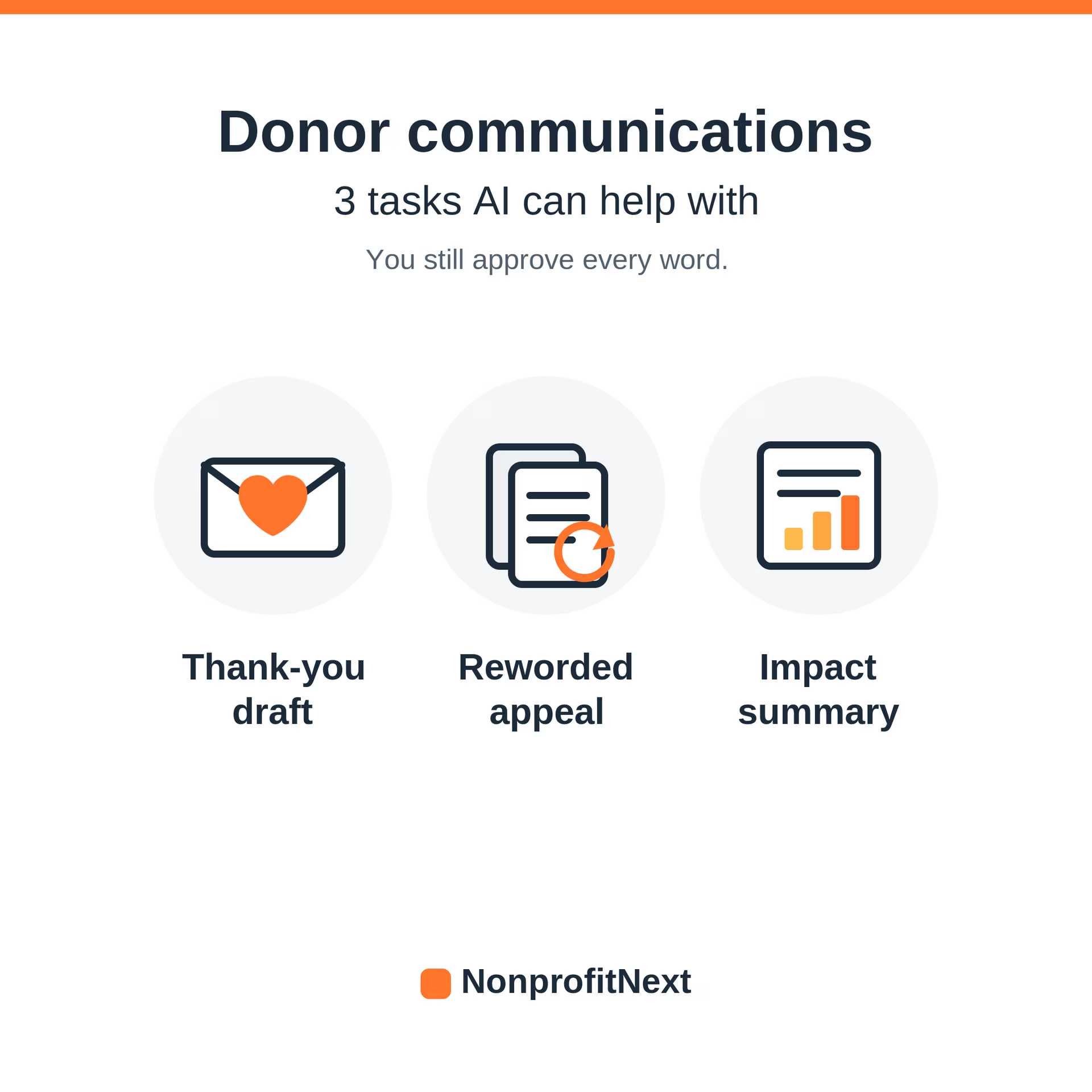
A first draft of a thank-you that you then personalize. The hardest part of a thank-you is often the blank screen. AI can hand you a warm, competent starting draft to react to, which is far easier than writing from nothing. You then add the specific detail only you know, the program their gift supported, the conversation you had at the gala, the reason this donor matters. The tool gives you a starting point, and you provide the meaning.
A reworded appeal for different audiences. One core message rarely fits everyone. The tone that lands with a longtime board member is not the tone for a first-time twenty-five-dollar donor. AI can take a single appeal and adjust its voice and emphasis for different segments in a couple of minutes, work that used to mean rewriting the same letter four times. You still decide what the ask is and who hears which version.
A plain-language summary of an impact report. Your program team produces ten pages of carefully constructed data. Your busy donor will read about three paragraphs of it. AI is genuinely good at compressing a long, accurate document into a short, readable summary that keeps the meaning intact. You check it against the source, because the numbers have to be right, and then you have something a donor will actually finish.
What AI Should Never Touch
Notice what is not on that list. The tool does not decide who to thank. It does not determine what your impact was. It does not know what is true about your organization. You do.
This is the line at the center of how we think about AI at NonprofitNext. We automate the repetitive work and leave the relational work alone. The judgment about which donor needs a personal call instead of an email, the genuine gratitude behind a thank-you, the honesty of an impact claim, all of that stays human. AI clears the time and friction of starting from nothing, so your judgment goes where it actually matters. A donor can tell the difference between a message you meant and a message a machine sent. The goal is to give you more time to mean it.
The One Caution: Protect Donor Data First
Before you paste anything into an AI tool, name what information you are about to share and where it is going.
Public AI tools can retain what you type and may use it to train their systems. That is fine for a generic thank-you template. It is not fine for a donor’s giving history, contact details, financial information, or anything else they trusted you to hold. The fix is simple discipline. Draft with general prompts and placeholders, then add the specific donor details yourself, in your own systems, after the draft exists. The tool helps with the words. It never needs the private data behind them.
If your organization has not yet written down what staff can and cannot put into these tools, that is important to do before you scale any of this up. It is a short document, and it prevents the most common and most avoidable AI mistake nonprofits make. Our nonprofit AI policy guide walks through writing one in an afternoon.
How to Start This Week
Pick one message you send constantly, the monthly thank-you is a good candidate. Write a clear, reusable prompt once that describes your voice, your mission, and what each version should include, using placeholders instead of real donor data. Then let ChatGPT, Claude, or your tool of choice produce a first draft, edit it with your judgment, and send. Do that for a few weeks and you will have reclaimed real hours, learned how these tools behave on safe ground, and built the confidence to choose a sensible second project.
If your time is measured in stolen minutes between everything else, this is designed to fit into the margins you actually have, not to demand hours you do not. The leader wearing every hat is precisely who stands to gain the most.
That is the whole philosophy in miniature. Start small, stay in control, protect the people who trust you, and let the technology give your team back the time to do the work only people can do.
Common Questions
Can AI write our donor thank-you letters? Yes, as first drafts. Give it your voice and the gift details in placeholders, then add the personal line only you know before it goes out.
Will donors be able to tell we used AI? Generic, unedited messages show. When a person edits every draft and adds the specific details that prove you know the donor, what arrives reads like you, because it is.
Is donor data safe to put into AI tools? Keep giving histories, contact details, and anything a donor trusted you to hold out of public tools. Draft with placeholders and add the specifics in your own systems.
Where should we start with AI for donor communications? The message you send most often, usually the monthly thank-you. Set up one reusable prompt, edit each draft before it goes out, and expand only after the first task has proven itself.
Want a clearer map of where AI fits in your nonprofit, and where it does not? Read our free guide for nonprofit leaders, or book a call at calendly.com/larry-nonprofitnext/30min to talk it through.
Larry is the co-founder and Principal Innovation Strategist at NonprofitNext. Learn more at nonprofitnext.ai.