Nonprofits should keep AI out of hiring decisions. AI in nonprofit hiring can quietly replicate bias and screen out qualified candidates, which undermines the equity most nonprofits work hard to protect. AI can still help with the logistics, like scheduling interviews or drafting a job post, but the decision about who to hire should stay with people.
One of the things I have come to appreciate about the nonprofit sector is that we get to make choices other industries often skip. Not only about programs and services, but about how we operate and what we are willing to stand behind. Where and how we use AI is one of those choices, and hiring is where I draw a hard line.
In this post: what the data shows about AI in hiring, the bias built into these systems, where AI can still help around the edges of hiring, and the questions I hear most.
AI in Nonprofit Hiring Is Deciding Who Gets Seen
A recent national survey of 1,000 hiring managers found that 73% of employers now use AI in recruitment and hiring. The specifics behind that number are more concerning, and they show why AI does not belong in the hiring decision itself.
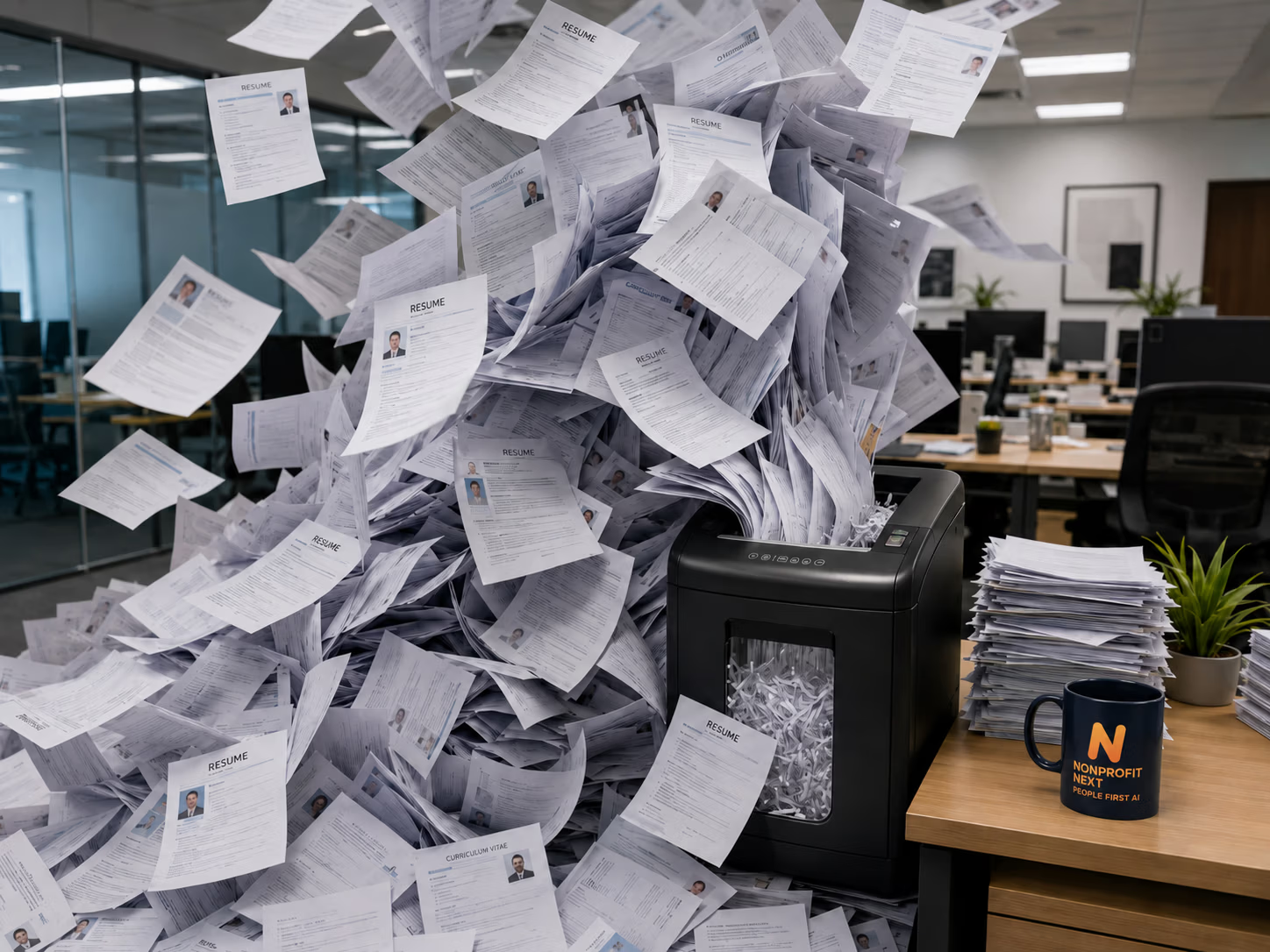
Sixty-five percent of hiring managers say AI automatically rejects applicants before a human ever reviews them. In 14% of cases, more than half of all applicants are filtered out before anyone looks at a single resume.
Let me put that in concrete terms. Someone with years of direct-service experience. Someone who took time away to care for a parent or a child. Someone whose resume reflects a career spent following the mission rather than building a tidy employment history. Someone who stepped back for their health, or because they were burned out. An algorithm decides about those people, and you never find out they applied.
The survey backs this up. Nearly half of employers, 47%, said AI filtered out candidates they would have moved forward if they had seen them. Not weak candidates. Not people who were underqualified. People they would have called for an interview.
The Bias Is Built In
The same survey found 51% of employers use AI to flag candidates it considers risky. That category includes people with career gaps or a pattern of frequent job changes.
In nonprofit work, those things mean something different. A career gap often means someone was a caregiver, was doing community work, or was working through a personal challenge that now informs everything they bring to the job. Frequent moves often mean grant cycles ended, organizations lost funding, or a person kept saying yes to the work wherever it was needed.
AI does not know any of that. It was built on data that reflects a very different kind of workforce. When it flags a nonprofit professional as risky, it applies a standard that was never designed for this sector.
When I think about the strongest hires I have made over the years, very few had conventional resumes. What they had was heart, commitment to the mission, the ability to connect with people facing difficult circumstances, and a kind of judgment you can only assess through conversation. Those qualities do not show up in a keyword match. They do not register in a scoring algorithm. You find them by talking to people and giving someone the chance to show you who they are.
Being Intentional Means Knowing When to Say No
People First AI is a framework for deciding where technology belongs. It is just as useful for deciding where it does not. This is the same order we bring to every tool decision, and you can read more about it in our post on why the tool comes last.
There are places where AI can support your hiring process without getting in the way of your judgment. Use it to draft and refine a job description. Use it to research a competitive salary range. Use it to help organize your notes after a round of interviews.
Where you draw the line is at the door. Every person who took the time to apply deserves a human being deciding whether they are worth a conversation. That is not a high bar. For a mission-driven organization, it should be a basic one.
Common Questions
Is it legal to use AI in hiring? In many places it is, though a growing number of states and cities now regulate automated hiring tools and require disclosure or bias audits. Legal or not, the question for a nonprofit is whether it fits your values, and in the hiring decision it does not.
Where can nonprofits safely use AI around hiring? On the work, not the people. Drafting a clearer job description, researching salary ranges, and organizing your own interview notes are all fine. The judgment about who to interview and who to hire stays human.
Does AI screening really reject good candidates? Yes. In the survey cited above, 47% of employers said AI filtered out people they would have wanted to interview. For a sector whose best hires often have unconventional resumes, that is a serious risk.
What should we do instead of AI screening? Read applications with human eyes, use structured questions so every candidate is judged on the same things, and give people a chance to show the qualities a resume cannot capture.
The hiring line belongs in writing, alongside the rest of your AI rules. Our nonprofit AI policy guide shows where it fits and how to write the rest of the policy in an afternoon.
Want help deciding where AI belongs in your organization and where it does not? I am glad to talk it through with you, no jargon and no sales pitch, just your questions and straight answers. Schedule a call with me at calendly.com/larry-nonprofitnext/30min.
Larry is the co-founder and Principal Innovation Strategist at NonprofitNext. Learn more at nonprofitnext.ai.