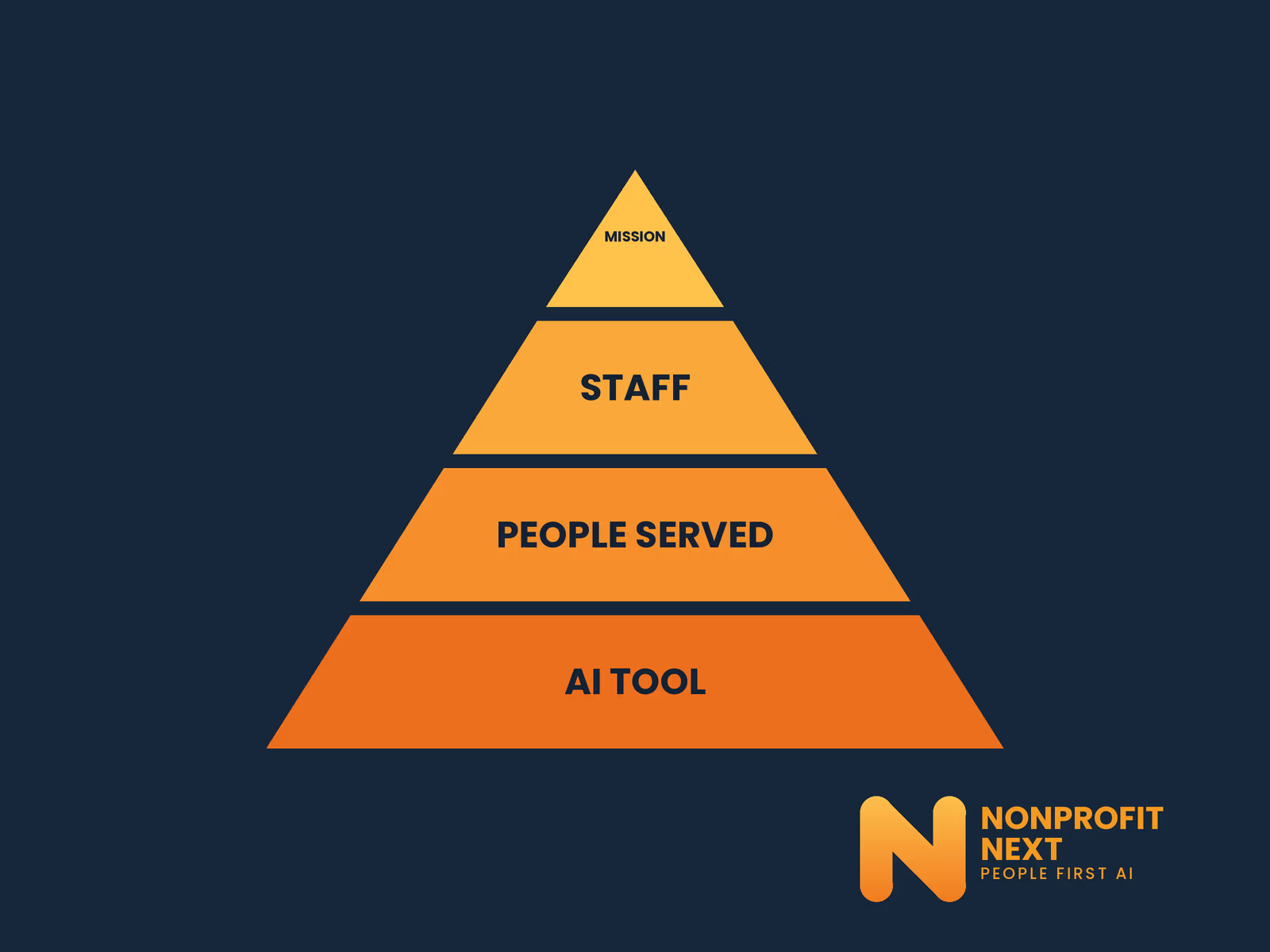
People first AI describes an order of operations. When we help a nonprofit think through AI, we work four questions in a fixed order, and the software is the last of them. Get the order right and the technology decisions get easy. Run it backwards, which is how most AI advice goes, and you end up with a tool nobody needed solving a problem nobody had.
This post lays out the order, shows what each step looks like in practice, and explains why starting with the mission saves you money and trust.
In this post: the four-part order, a section on each layer, why most advice runs backwards, what the order looks like week to week, and the questions I hear most.
The Four-Part Order
The order is mission, staff, people served, then the tool. That is the whole philosophy, and everything we teach comes back to it. The rest of this post is what each layer means when you sit down to make a real decision.
Mission First
Start by asking whether a use of AI serves why the organization exists. If it pulls you away from that, it is the wrong use, no matter how clever it looks in a demo.
A food bank does not exist to run the most advanced chatbot. It exists to get food to people. AI earns its place only when it moves that mission forward, usually by freeing the hours and attention the mission actually needs. A tool that just lets you say you use AI is a distraction with a subscription fee.
The test here is simple. Name the mission outcome the tool would serve. If you cannot name one, you have your answer before you spend a dollar.
Staff Second
Next, ask whether the tool gives your people their hours and judgment back, or whether it tries to replace the human part of the work. We automate the repetitive work and leave the relational work alone.
The report scaffolding, the data entry, the fortieth version of the same email, all of that is fair game. The conversation with a family in crisis, the read on whether a client is ready for a next step, the trust built over months, that is the work itself, and no tool should touch it. Good AI gives your best people more time for the work only they can do.
This is also where adoption lives or dies. A tool chosen for staff, with staff, gets used. A tool dropped on them from above gets quietly ignored, no matter how good it is. Bring the people who will use it into the decision early.
People Served Third
Then ask whether the tool protects the dignity and privacy of the people who walk through your door.
Many of the people nonprofits serve are in difficult situations and have good reason to be careful about where their information goes. Before any tool touches their data, you owe them the hard questions about storage, access, and whether their information is being used to train a commercial model. If you cannot answer those questions, the tool waits.
The Tool Comes Last
Only after those three questions is it time to ask which software. By then the choice is usually clear, because you know exactly what problem you are solving and what you will not compromise to solve it. The tool becomes a detail rather than the whole strategy.
Why Most Advice Runs Backwards
The typical AI pitch starts with the tool and hopes the mission catches up. Buy this platform, then find something to do with it. That is how organizations end up with expensive software gathering dust and staff quietly resentful of one more thing to log into.
Start with the mission and let it choose the tool, and you rarely waste money, because you never buy anything you did not have a reason for. You also protect the two things that are hardest to get back once they are gone: your staff’s goodwill and your community’s trust.
What the Order Looks Like Week to Week
Picture a small arts nonprofit weighing an AI tool a board member recommended. Running the order, they ask what mission outcome it serves and realize it mostly duplicates work they already do. They stop there. A month later a real need surfaces: their one communications staffer is drowning in patron emails. That is a staff-time problem with no sensitive data attached, so they try a simple drafting workflow, keep a human on every message, and give that staffer her afternoons back. Same organization, two decisions, one clear order.
Common Questions
What does people first AI actually mean? It means putting your mission, your staff, and the people you serve ahead of the technology, in that order, so a tool is adopted only when it serves those first. The tool is the last decision, not the first.
Is people first AI just about being cautious? No. It is about being deliberate. The order helps you move quickly on the uses that clearly serve your mission and say no cleanly to the ones that do not.
How is this different from other responsible AI advice? Much of the good advice in this space is a general orientation. This is a concrete order you can apply to a specific decision on a specific afternoon, which makes it usable rather than aspirational.
Where should a nonprofit start? Start with one repetitive, low-stakes task that keeps a good person from better work, and run it through the order. Use the first win to pick the next task.
This is the foundation piece in our People First series. Read what a People First approach means for your staff, your leadership team, your board, and the people you serve.
Want to work through this order for your own organization? I am glad to talk it through with you, no jargon and no sales pitch, just your questions and straight answers. Book a short call with me.
Larry is the co-founder and Principal Innovation Strategist at NonprofitNext. Learn more at nonprofitnext.ai.