
Case Study
Around the Clock Answers: the Virtual Information and Referral Assistant
About the Organization
Direct Advocacy and Resource Center, Tucson, Arizona. DIRECT provides information and referral, advocacy, and independent living services for people with disabilities across Tucson and Southeast Arizona.
DIRECT is a Center for Independent Living. The same assistant fits any organization that answers “who can help me with” questions from its own approved information. See where else this fits.
How We Protect the Information You Trust Us With
The assistant answers from your organization’s approved directory. It does not ask for a visitor’s name or contact details and does not need them to answer.
- No personal information reaches the AI.Names, contact details, and anything else that identifies a person are removed or never collected before the AI sees a single word. The AI works with the question or the pattern, not the person.
- Nothing is used to train AI models.We use the AI through business agreements that forbid the provider from learning from your information. What your organization sends is used to answer, and for nothing else.
- Nothing is kept.Information is processed and released. The AI provider does not store it, and the tool does not build a copy of your records anywhere. Your own systems remain the only record.
- NonprofitNext keeps nothing.Because your organization owns the tool and its own AI account, no data or records belonging to your organization ever sit with us. When the build is finished, we walk away with nothing but the lessons learned.
The Challenge
Staff spent significant time every day searching for the resources people asked about: housing, food, shelter, utility assistance, and many others. The same questions arrived over and over.
Community members in crisis also called after 5 o’clock, on weekends, or when staff were unavailable. They reached voicemail and waited for a call back, sometimes for needs that could not wait.
The Solution
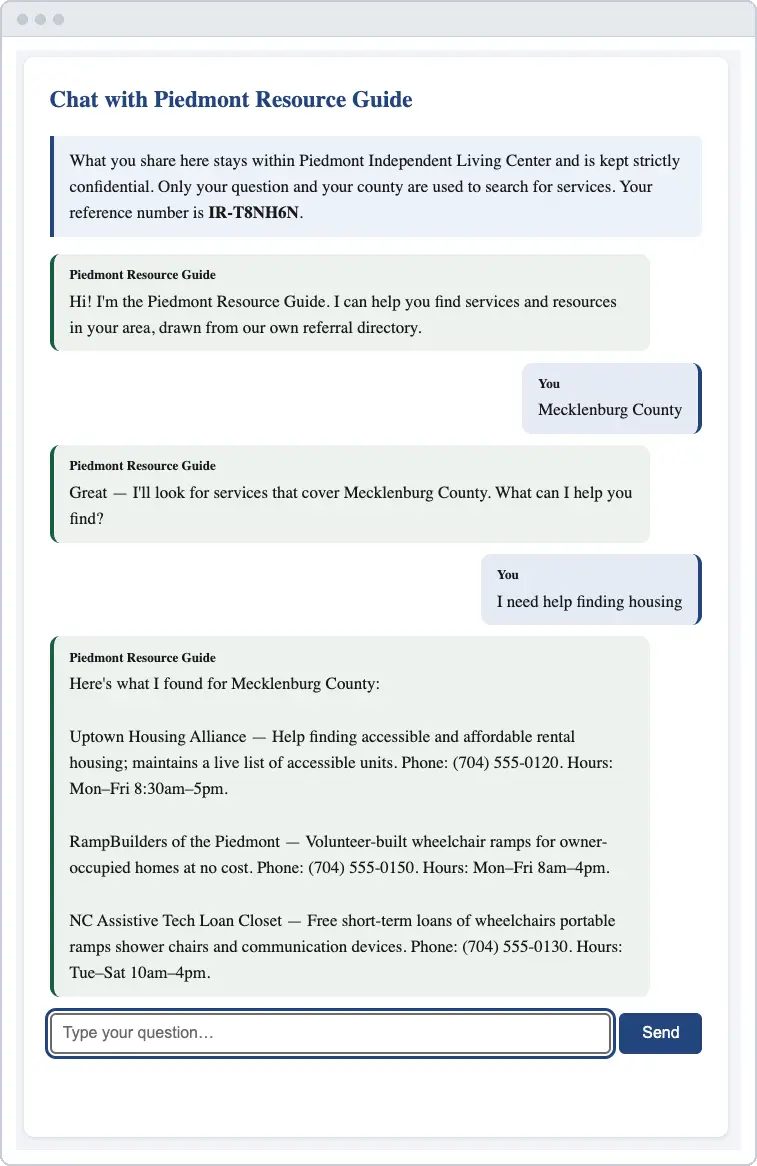
NonprofitNext built the Virtual Information and Referral Assistant, the first configuration of our AI Knowledge and Resource Assistant, a nonprofit AI chatbot that lives on DIRECT’s website and answers the questions I&R staff spend all day answering: where someone can get help. A visitor answers a few intake questions, selects their county, and asks in their own words. “I need a ramp for my house.” “My mom cannot cook anymore and needs rides to the doctor.” The assistant searches DIRECT’s own referral directory and responds with the services that match, including phone numbers, hours, and eligibility requirements.
The chatbot answers only from the directory. If nothing fits, it says so, offers the office phone number, and logs the question so staff can follow up. It never improvises a referral, and it is available in the middle of the day and after hours when the office is closed.
- For the public Help finding services around the clock, in plain language, without a phone call. If a program has a waitlist, an income limit, or required documents, the answer says so, saving the individual time and effort.
- For staff A staff entrance skips the intake form so the team can use the assistant during calls and meetings. Staff usage is excluded from community statistics, so reports reflect real public demand.
- For leadership The intake collects reporting demographics through pull-down menus, so report counts build themselves without typos. Questions the assistant could not answer are logged with their full text, building a map of unmet need in the service area that feeds program planning and grant writing.
The Result
Accessible by Design
Accessibility is not an add-on. The assistant works fully with screen readers and assistive technology, meets contrast requirements, and never uses puzzles or image challenges to filter out automated abuse. The protections it uses instead are invisible to every real visitor. DIRECT’s resource directory stays in a spreadsheet its staff maintain, so updates take effect immediately, and the organization owns the whole system.
Where Else This Fits
DIRECT’s assistant answers from a referral directory. The same system answers from whatever approved information your organization gives it, and it never invents an answer. It can also work inside your organization, answering staff questions about policies, grants, and benefits.
- Area Agency on AgingA caregiver asks in plain words about respite care or rides to dialysis and gets the programs that serve their county, with eligibility stated up front.
- Legal aid or 211-style helplineRoutine “who can help me with” questions are answered from the agency’s own directory at any hour, and the questions nobody could answer become a record of unmet need.
- Food bank or community action agencyA pantry locator that understands “I need groceries this week and I do not drive,” answers from the agency’s own list, and never invents a location.
- Program navigator“Which of your programs might help me? Am I eligible? What documents do I need?” for workforce, housing, youth, and legal services organizations.
- Staff knowledge assistantStaff ask about internal policies, procedures, program rules, and grant requirements instead of hunting through PDFs and shared drives.
- Volunteer, member, or donor assistantOnboarding questions, benefits, events, giving options, and organization information, answered from your approved content.
Tools Used
- Custom AI Assistant
- The Organization’s Own Referral Directory
- County Filtering
- Accessible by Design
The Same Question, All Day
If your staff answer the same questions every day, an assistant like this one can give that time back around the clock. Book a short call and we will talk through what it would take for your organization.