
AI Use Cases for Nonprofits: What It Looks Like in Your Field
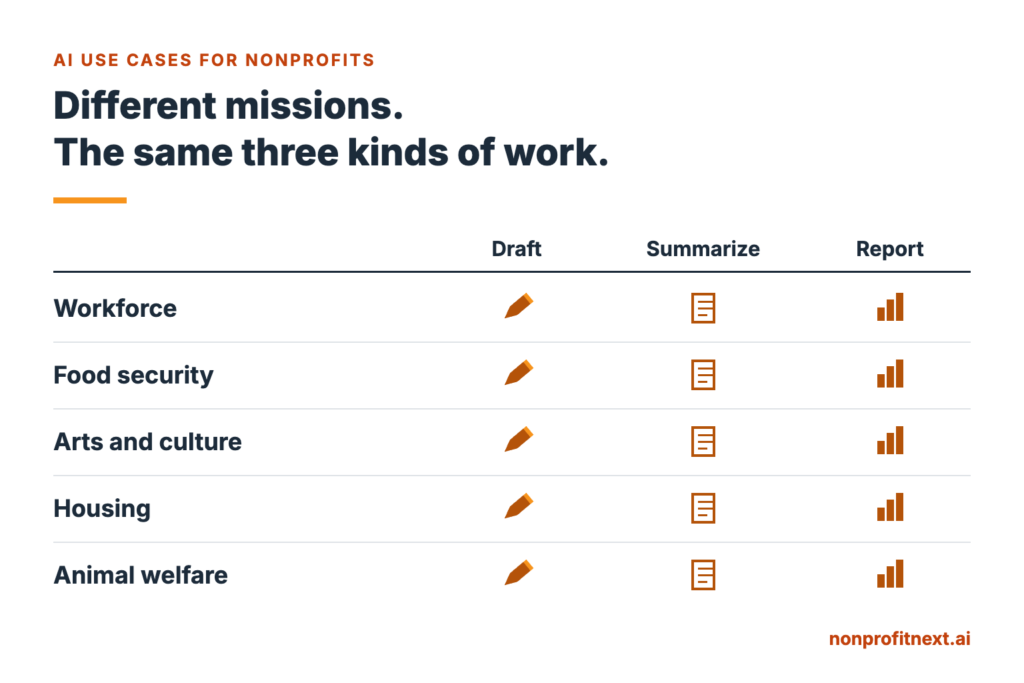
AI use cases for nonprofits fall into three kinds of work: drafting, summarizing, and reporting. See what each one looks like in five different fields.
AI for Small Nonprofits: A Realistic Guide for the ED Who Does Everything
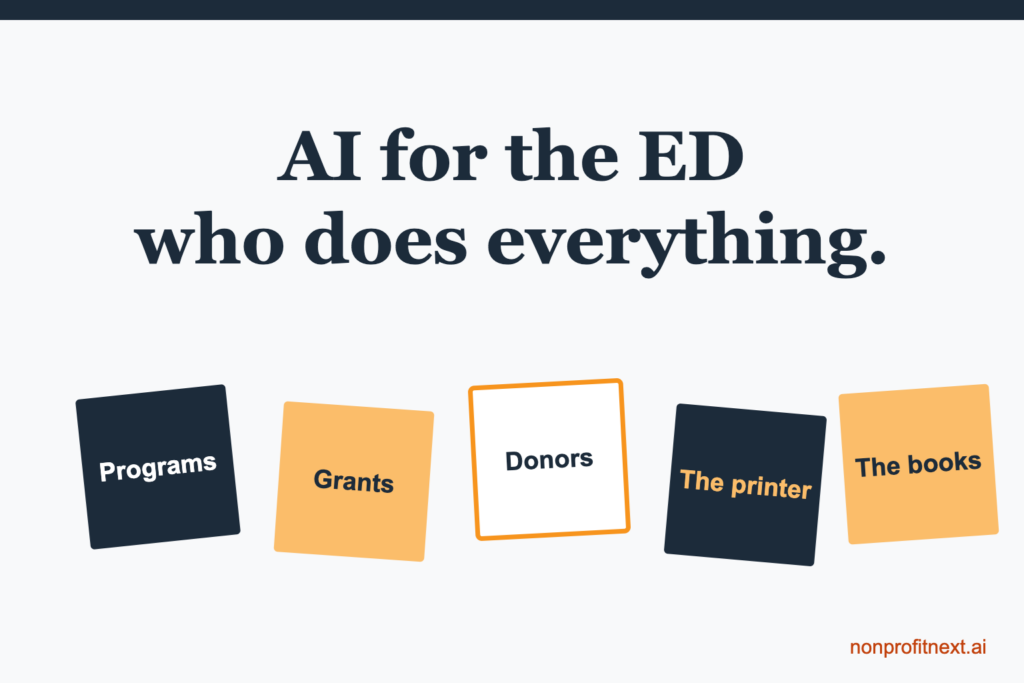
You run the programs, write the grants, thank donors, fix the printer, and close the books, sometimes all in the same afternoon. Most advice about AI for small nonprofits assumes you have a tech team and a budget line.
How to Choose AI Tools for Nonprofits Without Wasting Money
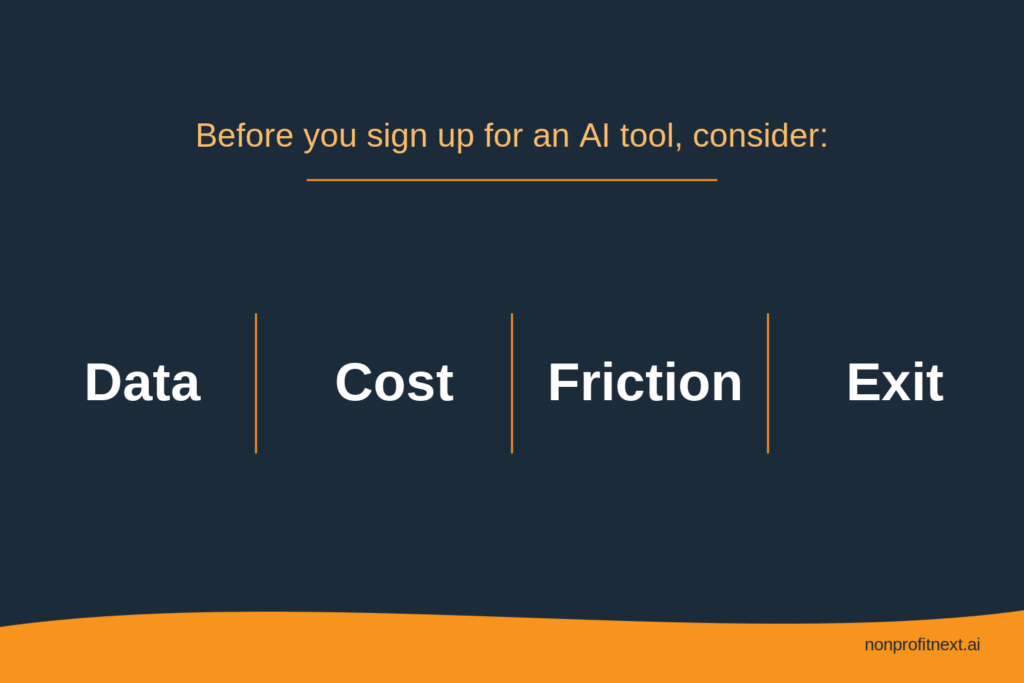
Here is how to choose AI tools for nonprofits without wasting money: name the task you need done, ask four questions about data, cost, friction, and exit, and run a two-week pilot before you spend anything. Search the phrase and you will find list after list, twenty tools, fifty tools, ranked and starred.
AI Accessibility for Nonprofits: What Disability Taught Me
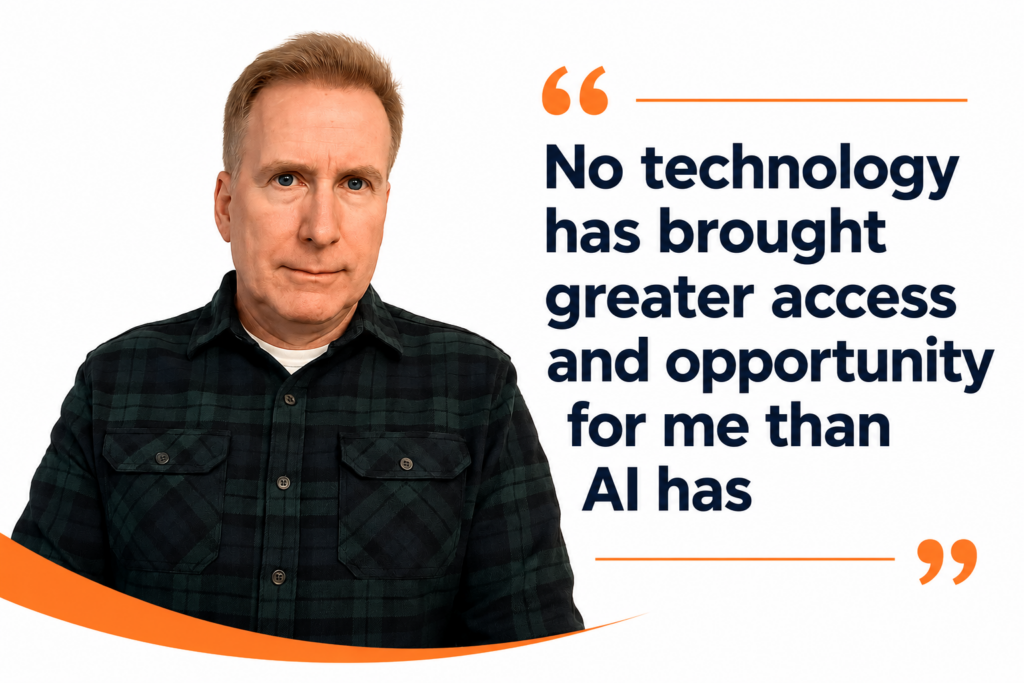
While I have worked with nonprofits for 25 years, I have had a disability for my entire life. No technology has opened as many doors for me as AI has.
People-First AI: Why the Tool Comes Last
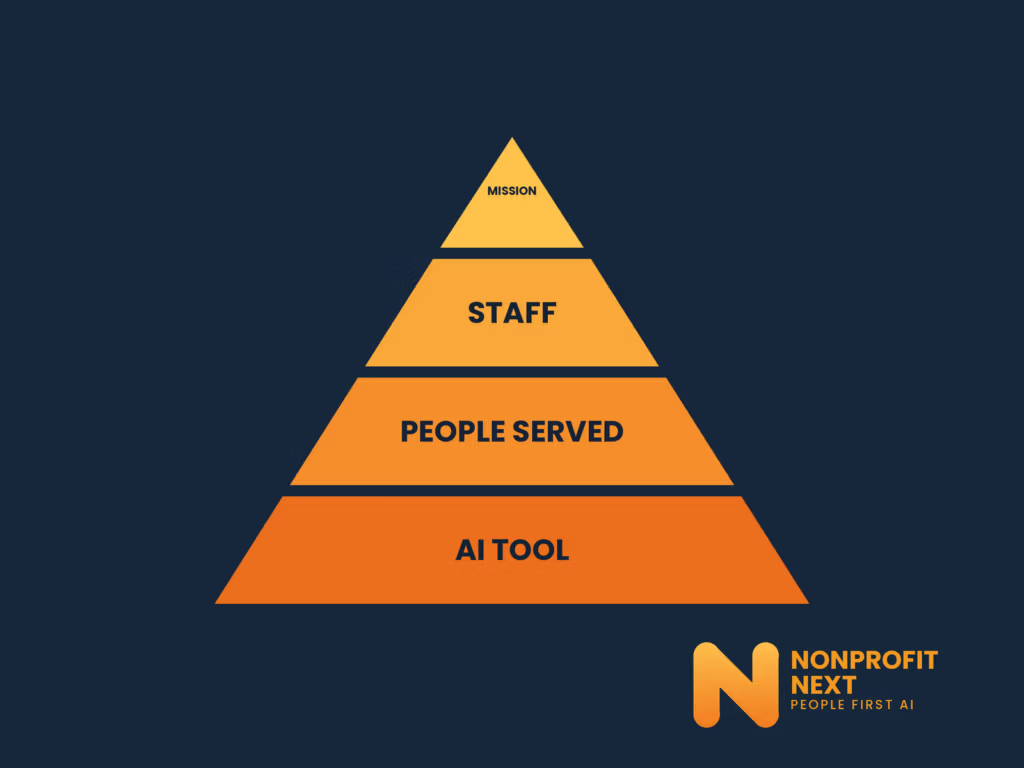
People-First AI is an order of operations. Work through mission, staff, and the people you serve first, and the right tool becomes obvious. Here is the order and why most AI advice runs backwards.
Donor Communications: Where Most Nonprofits Should Start With AI
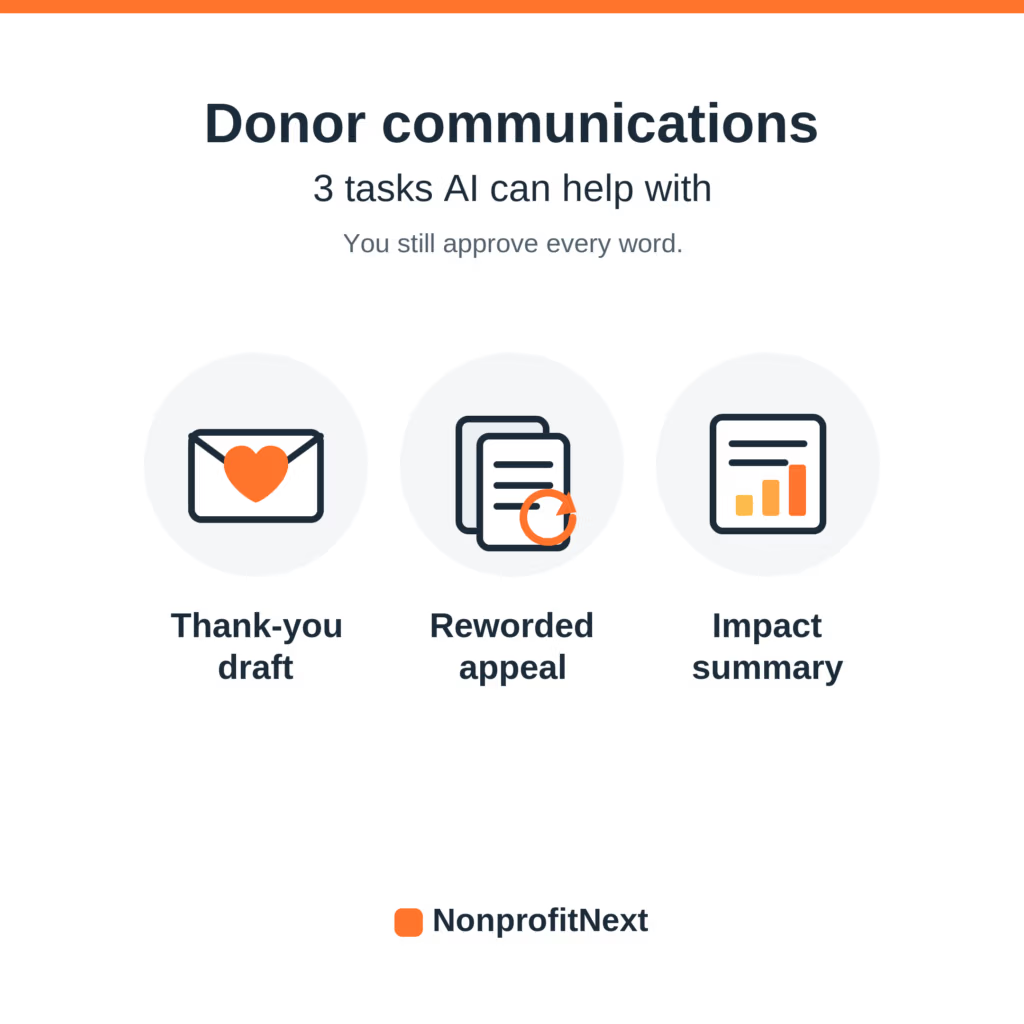
Donor communication is the safest, highest-value place for a nonprofit to start with AI. Here are three tasks it handles well, the work it should never touch, and the one privacy caution to get right first.
What “People-First AI” Means For The People You Serve
Every nonprofit organization exists because someone, somewhere, needs support that they are struggling to provide for themselves. A family navigating a housing crisis. A young person who needs a mentor. An individual living with a disability. A community working to recover from something.
What “People-First AI” Means For Your Staff
You didn’t take this job because you wanted to spend your afternoons filling out forms.
You took it because you wanted to make a difference. Because the work matters. Because the people you serve deserve someone in their corner. And yet, if you are honest about how your days actually look, a significant portion of your time goes to working on things that have nothing to do with why you showed up in the first place. Timesheets. Case notes. Progress reports. Data entry. Email after email after email. Yes, all of these are part of the job, but they take you away from what is most important, the people.
What “People-First AI” Means For Your Leadership Team
During your board meeting last night, someone asked whether the organization is being responsible about using AI. You recently learned that one of your staff members was using AI to help write clear case notes while another shared they are wondering whether AI might impact their job in the future.
What “People-First AI” Means For Your Board
“Should we be using AI?” One of your board members has read an article, attended a conference, or talked with someone from another organization that just launched something new. And the board member wants to know where the organization stands.